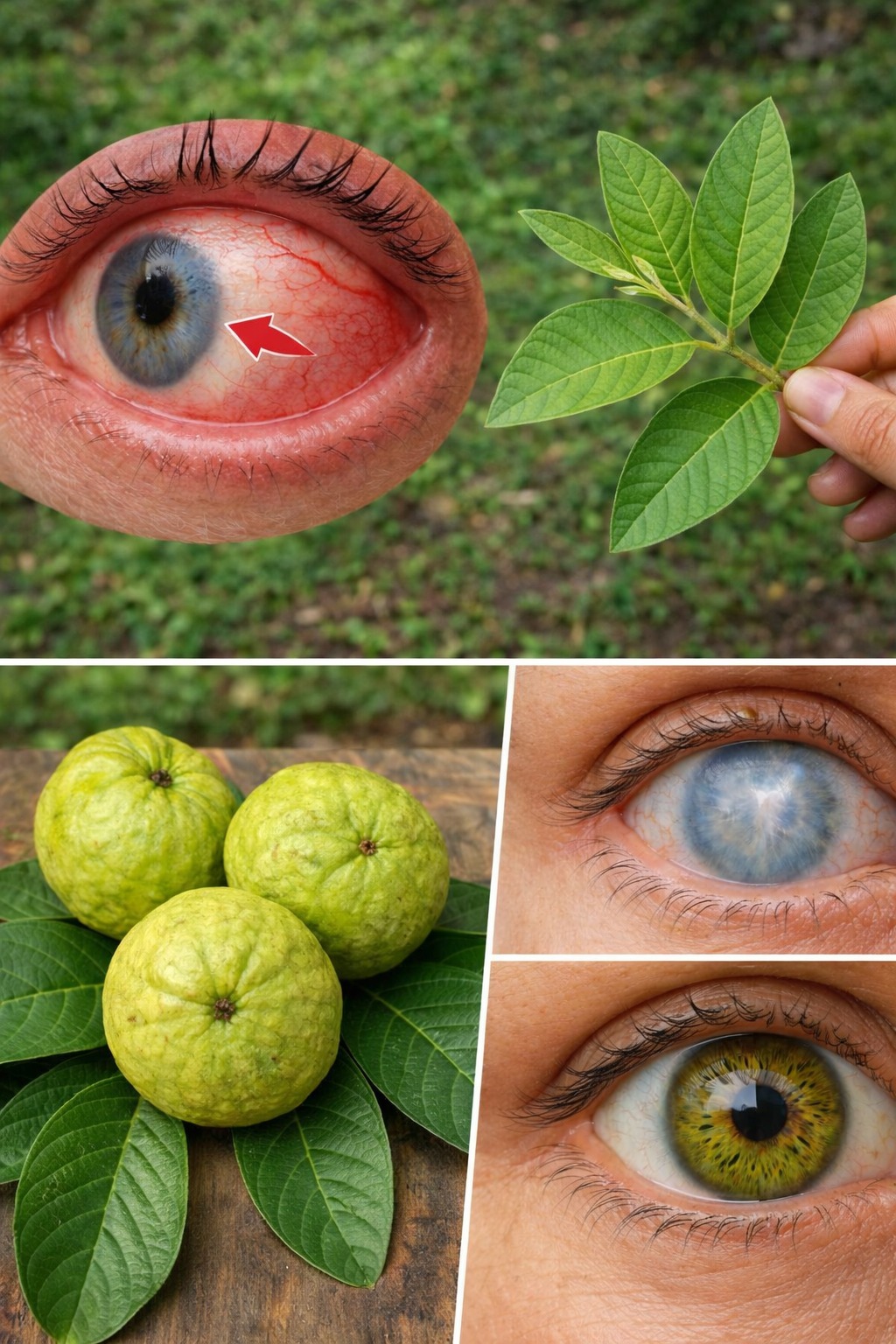
Guava is one of those fruits that looks simple, but it has a strong reputation in traditional wellness recipes.
The fruit is fresh.
The leaves are used in homemade teas.
And the whole plant has that “grandma probably knew about this before the internet” energy.
Many people online talk about guava for red eyes, blurry vision, cataracts, and general eye health.
But let’s be honest from the beginning.
Guava cannot cure cataracts, glaucoma, infections, or serious eye disease.
And you should never put guava juice, guava leaf water, or homemade herbal drops directly into the eyes.
The eyes are delicate, and homemade liquids can carry germs or irritate the surface.
This recipe is meant as a drink or tea to support general wellness, not as an eye-drop treatment.
Why Guava Is Popular for Eye Health
Guava is naturally rich in vitamin C, antioxidants, fiber, and plant compounds.
Vitamin C is important because it helps protect cells from oxidative stress, supports collagen production, and plays a role in overall tissue health. The NIH notes that vitamin C is an antioxidant and is needed for collagen synthesis and immune function. (Bureau des suppléments alimentaires)
Guava is especially known for its high vitamin C content.
A research review notes that guava contains vitamin C and other nutrients, and another food analysis reports guava as a strong source of ascorbic acid, with about 228.3 mg per 100 g. (PMC)
That does not mean guava “repairs eyes” overnight.
But it can be a smart fruit to include in a balanced diet.
A Quick Eye Safety Reminder
If you have eye pain, sudden blurry vision, redness, swelling, pus, light sensitivity, or vision loss, do not rely on homemade remedies.
Get medical advice.
Cataracts can cause blurry vision, faded colors, glare, trouble seeing at night, and other symptoms. The National Eye Institute says surgery is the only way to get rid of cataracts when treatment is needed. (nei.nih.gov)
Glaucoma is also serious because early symptoms are often absent, and later symptoms can include peripheral vision loss, blind spots, and blindness. Diagnosis needs a dilated eye exam and treatment may include eye drops, laser, or surgery. (nei.nih.gov)
So yes, enjoy guava.
But please let the eye doctor do eye-doctor things.
Your blender is talented, but it is not an ophthalmologist.
Guava Eye Support Juice
This drink is fresh, naturally sweet, and easy to prepare.
It is made with guava, carrot, lemon, and water.
The carrot adds beta-carotene, which the body can turn into vitamin A.
Vitamin A is important for normal vision, immune function, and cell growth. (PMC)
Ingredients
2 ripe guavas.
1 small carrot.
Juice of ½ lemon.
1 cup cold water.
1 teaspoon honey, optional.
A few mint leaves, optional.
Ice cubes, optional.
How to Make It
Wash the guavas very well.
Cut them into pieces.
Remove hard seeds if you prefer a smoother drink.
Wash and peel the carrot.
Chop it into small pieces.
Add the guava, carrot, lemon juice, and cold water to a blender.
Blend until smooth.
Strain if you want a lighter juice.
Keep it unstrained if you want more fiber.
Add honey only if needed.
Serve fresh with ice.
Simple.
Bright.
Homemade.
And much better than a sugary bottled drink pretending to be healthy.
What It Tastes Like
This juice tastes fresh, fruity, and slightly tangy.
The guava gives a tropical sweetness.
The carrot adds a soft earthy flavor.
The lemon makes everything brighter.
Mint gives it a refreshing finish.
It is the kind of drink that feels healthy without tasting like punishment.
Very important.
Because nobody wants wellness that tastes like wet grass.
Guava Leaf Tea Option
If you prefer tea, guava leaves can be used in a simple homemade infusion.
This is for drinking only.
Not for eye drops.
Not for eye washing.
Not for putting near the eye.
Ingredients
5 fresh guava leaves.
2 cups water.
1 teaspoon honey, optional.
A slice of lemon, optional.
How to Prepare It
Wash the guava leaves carefully.
Add the water to a small pot.
Bring it to a gentle boil.
Add the leaves.
Let them simmer for 8 to 10 minutes.
Turn off the heat.
Cover and let it sit for 5 minutes.
Strain into a cup.
Add lemon or honey if desired.
Drink warm.
That’s it.
Simple and old-fashioned.
Exactly the kind of recipe that makes the kitchen smell like someone’s grandmother is about to give advice.
How Often to Drink It
You can enjoy the juice a few times per week.
You can enjoy guava leaf tea occasionally.
Do not overdo it.
More is not always better.
If you take medication, have diabetes, are pregnant, breastfeeding, or have a medical condition, ask a healthcare professional before drinking guava leaf tea regularly.
Natural does not always mean suitable for everyone.
Even leaves need boundaries.
What Guava Can Support
Guava can support a healthy routine because it adds fruit, antioxidants, hydration, and vitamin C to your diet.
That may support general wellness.
It may support healthy skin.
It may support immune health.
It may support a colorful diet, which is good for overall health.
But it cannot reverse cataracts.
It cannot cure glaucoma.
It cannot treat eye infections.
And it cannot replace prescription eye drops.
That difference matters.
A lot.
What Not to Do
Do not squeeze guava juice into your eyes.
Do not use guava leaf water as eye drops.
Do not wash your eyes with homemade herbal tea.
Do not apply crushed leaves to the eyelids.
Do not use lemon near the eyes.
Do not use any homemade plant mixture for red, painful, infected, or blurry eyes.
The American Academy of Ophthalmology recommends simple supportive care for mild pink eye symptoms, such as using a clean warm damp washcloth to loosen crust, but medical care may be needed depending on the cause. (aao.org)
Clean compresses are very different from homemade plant drops.
Please do not let the internet confuse the two.
Better Daily Habits for Eye Health
Guava can be part of a bigger eye-friendly lifestyle.
Eat colorful fruits and vegetables.
Drink enough water.
Wear sunglasses outside.
Take screen breaks.
Avoid rubbing your eyes.
Sleep enough.
Use good lighting when reading.
Get regular eye exams.
MedlinePlus advises avoiding eye rubbing because it can transfer dirt and bacteria, using good lighting, and wearing protective eyewear when needed. (MedlinePlus)
Tiny habits matter.
Your eyes work all day.
They deserve more than being stared at by a phone screen until midnight.
When to See an Eye Doctor
See an eye doctor quickly if you notice sudden vision changes.
Also get checked if you have eye pain, severe redness, light sensitivity, discharge, swelling, injury, or blurry vision that does not improve.
If you see halos around lights, lose side vision, or have severe headache with eye pain, do not wait.
Some eye problems are time-sensitive.
A juice can wait.
Your vision should not.
Final Thoughts
Guava is a beautiful fruit for homemade wellness recipes.
It is rich in vitamin C, refreshing, easy to prepare, and perfect for juices or teas.
But guava is not a cure for eye disease.
The safest way to use guava for eye support is to eat the fruit or drink it as juice or tea.
Never put homemade guava remedies into the eyes.
The best routine is simple:
Fresh foods.
Good hydration.
Less eye strain.
Regular eye exams.
And medical care when symptoms are serious.
Sometimes natural wellness is not about miracle cures.
Sometimes it is just one fresh glass, one better habit, and one smart decision to protect what helps you see the world every day.