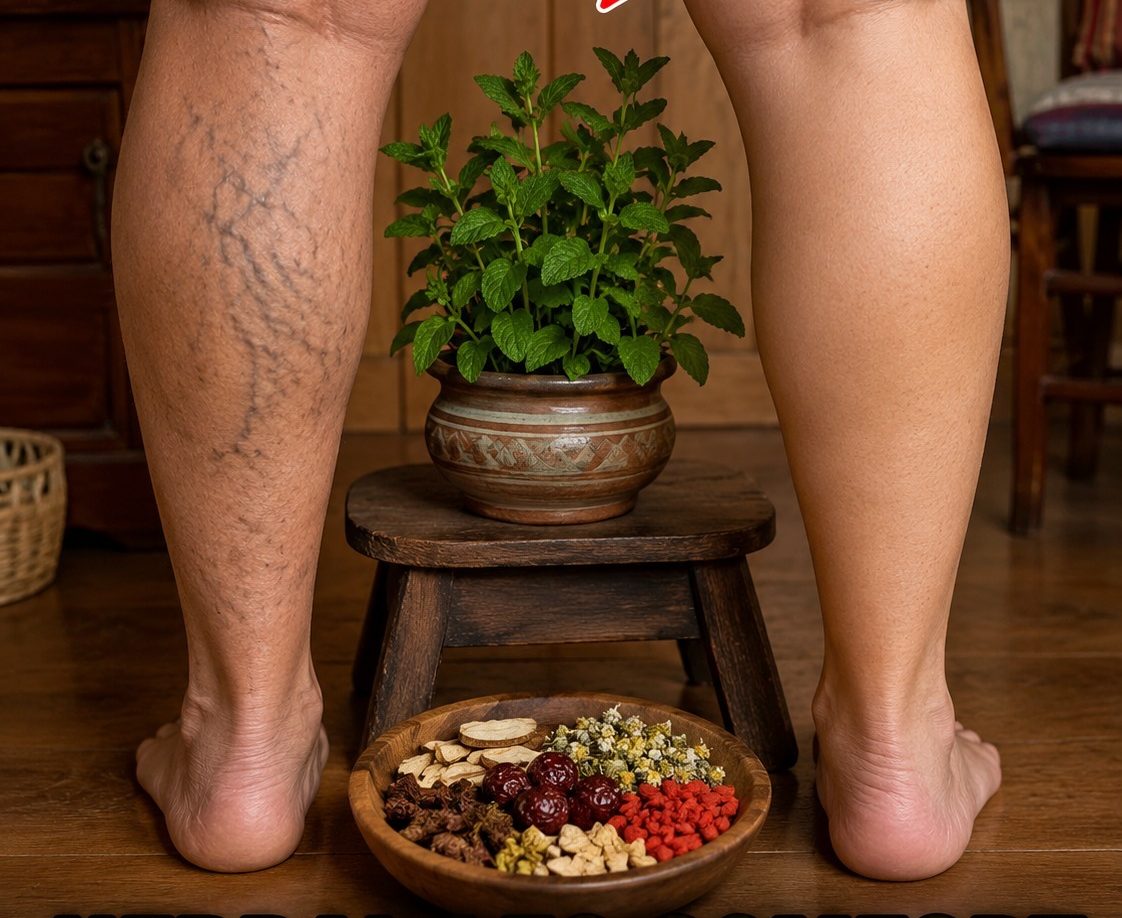
Heavy legs, visible veins, swelling, and leg pain are things many people ignore for too long.
They say, “Maybe I stood too much today.”
Or, “Maybe it’s just age.”
Or, “Maybe I slept in a strange position again.”
And honestly, the body does love creating mystery sometimes.
But when leg discomfort comes with swelling, warmth, redness, tenderness, or sudden pain, it should be taken seriously.
Some leg symptoms can be related to circulation problems, varicose veins, or even deep vein thrombosis, also called DVT. The CDC lists common DVT symptoms as swelling, pain or tenderness, warmth, and redness or discoloration in the affected leg or arm. (CDC)
Important Reminder First
No herb can safely “fight dangerous blood clots” at home.
A blood clot in the leg can become serious if it travels to the lungs.
Mayo Clinic says emergency help is needed for possible pulmonary embolism symptoms such as sudden shortness of breath, chest pain while breathing or coughing, rapid breathing, rapid pulse, fainting, or coughing up blood. (Mayo Clinic)
So this recipe is not a treatment for blood clots.
It is a gentle herbal leg comfort drink for people who want a warm, relaxing homemade routine.
If you suspect a clot, do not wait for tea.
Call a doctor or emergency service.
Your legs deserve better than internet guessing.
Why People Use Herbal Drinks for Leg Comfort
Herbal drinks are popular because they feel calming.
They are warm.
They are simple.
They help people slow down after long days.
And sometimes, after standing for hours, walking too much, or sitting too long, a warm cup of tea feels like a small act of mercy.
This recipe uses mint, ginger, chamomile, cinnamon, and lemon.
It is not meant to dissolve clots.
It is meant to support a relaxing evening routine while you also take care of your legs properly.
That difference matters.
Full Herbal Leg Comfort Tea Recipe
This tea is light, warm, and easy to make.
It is especially nice in the evening after a long day on your feet.
Ingredients
- 1 cup water
- 5 fresh mint leaves
- 1 small slice fresh ginger
- 1 teaspoon dried chamomile
- 1 small cinnamon stick
- Juice of ½ lemon
- 1 teaspoon honey, optional
If you are watching blood sugar, skip the honey.
If ginger bothers your stomach, use a smaller piece.
If cinnamon feels too strong, use only half a stick.
Simple recipes should adapt to your body, not bully it.
How To Prepare It
Add the water to a small pot.
Bring it to a gentle boil.
Add the ginger and cinnamon.
Let them simmer for about 5 minutes.
Turn off the heat.
Add the mint and chamomile.
Cover the pot and let it steep for another 5 minutes.
Strain into a cup.
Let it cool slightly.
Add lemon juice.
Add honey if desired.
Drink warm.
That’s it.
Simple.
Cozy.
Homemade.
And much easier than trying to understand why one leg feels like it worked overtime while the other one stayed unemployed.
What Does It Taste Like?
This tea tastes fresh, warm, and lightly spicy.
Mint makes it refreshing.
Chamomile makes it soft and calming.
Ginger gives a gentle kick.
Cinnamon adds warmth.
Lemon makes everything brighter.
It is the kind of tea that feels like a quiet evening in a cup.
Not dramatic.
Not magical.
Just comforting.
How To Use It in a Leg Comfort Routine
Drink one warm cup in the evening.
Then give your legs a few minutes of care.
Sit down.
Raise your legs slightly.
Move your ankles in circles.
Stretch your calves gently.
Take a short walk if you have been sitting too long.
If your doctor recommended compression stockings, use them properly.
For varicose veins, Mayo Clinic explains that compression stockings are often the first approach, because they squeeze the legs and help veins and leg muscles move blood. (Mayo Clinic)
This kind of routine is simple.
But simple does not mean useless.
Sometimes the boring habits are the ones that actually help.
Helpful Daily Habits for Heavy Legs
Leg comfort is not only about one tea.
It is about daily habits.
Move more often.
Avoid sitting still for too long.
Stretch your legs.
Drink enough water.
Elevate your legs when resting.
Wear comfortable shoes.
Avoid very tight clothing around the waist, legs, or groin.
Mayo Clinic Health System advises changing position often, walking or stretching every 30 minutes, exercising regularly, managing weight, and avoiding tight clothing to support leg vein health. (Mayo Clinic Health System)
Yes, it sounds basic.
But the body loves basic things.
Water.
Movement.
Sleep.
Less stress.
It is annoyingly traditional like that.
When Leg Symptoms Are Serious
Please do not ignore warning signs.
Call a healthcare professional quickly if one leg becomes swollen, painful, warm, red, or discolored.
Seek emergency care if leg symptoms come with chest pain, breathing trouble, coughing blood, fast heartbeat, lightheadedness, sudden weakness, numbness, or trouble speaking. Mayo Clinic lists these as emergency warning signs related to blood clots and possible serious complications. (Mayo Clinic)
This is not the moment for “let me try herbs first.”
This is the moment for medical care.
Tea can wait.
Your health cannot.
Be Careful With “Blood-Thinning” Herbs
Many posts online talk about “natural blood thinners.”
But this can be risky.
Herbs and supplements may interact with medications.
NCCIH warns that some herbs can have high-risk interactions with certain medicines, and ginkgo may increase bleeding risk when taken with anticoagulants such as warfarin. (NCCIH)
Garlic and some supplements have also been linked with bleeding concerns in medical literature, especially around surgery or when combined with blood-thinning drugs. (PMC)
So if you take blood thinners, aspirin, heart medicine, blood pressure medicine, diabetes medicine, or you are preparing for surgery, ask a healthcare professional before using strong herbs regularly.
Natural does not mean automatically safe.
Even herbs need manners.
Who Should Be Careful With This Tea?
Be careful with this tea if you are pregnant, breastfeeding, taking blood thinners, taking blood pressure medication, taking diabetes medication, or managing kidney, liver, heart, or stomach problems.
Also be careful if you have ulcers or acid reflux, because ginger and lemon may irritate some stomachs.
If you feel burning, dizziness, nausea, or discomfort after drinking it, stop.
Your body is not being rude.
It is giving feedback.
Can This Help Varicose Veins?
This tea will not remove varicose veins.
Visible veins usually need lifestyle management or professional treatment depending on severity.
But gentle habits may help reduce discomfort.
Walking, leg elevation, compression stockings, and avoiding long periods of standing or sitting are often more useful than any single drink.
The tea can be part of the relaxing routine.
But the legs still need movement.
Unfortunately, we cannot outsource circulation to mint leaves.
Storage Tips
This tea is best fresh.
Make one cup at a time.
If you prepare extra, store it in a covered glass jar in the refrigerator.
Drink within 24 hours.
Warm gently before drinking.
Do not keep herbal tea for many days.
Old tea in the fridge always starts looking like it has secrets.
Easy Variations
You can adjust the recipe easily.
Add more mint for freshness.
Add turmeric for an earthy flavor.
Add lemon peel for brightness.
Skip cinnamon if you dislike warm spices.
Use only chamomile and mint if you want a softer nighttime drink.
Recipes should feel useful, not stressful.
Final Thoughts
This herbal leg comfort tea is warm, simple, and calming.
It can be a nice evening drink for people dealing with tired, heavy legs after long days.
But it does not treat dangerous blood clots.
It does not replace medication.
And it does not replace urgent medical care.
The real support comes from knowing warning signs, moving regularly, elevating your legs, using compression when recommended, and speaking with a doctor when symptoms look serious.
The tea is just a gentle helper.
A warm cup.
A quiet moment.
A small reminder to care for your legs before they start complaining louder.