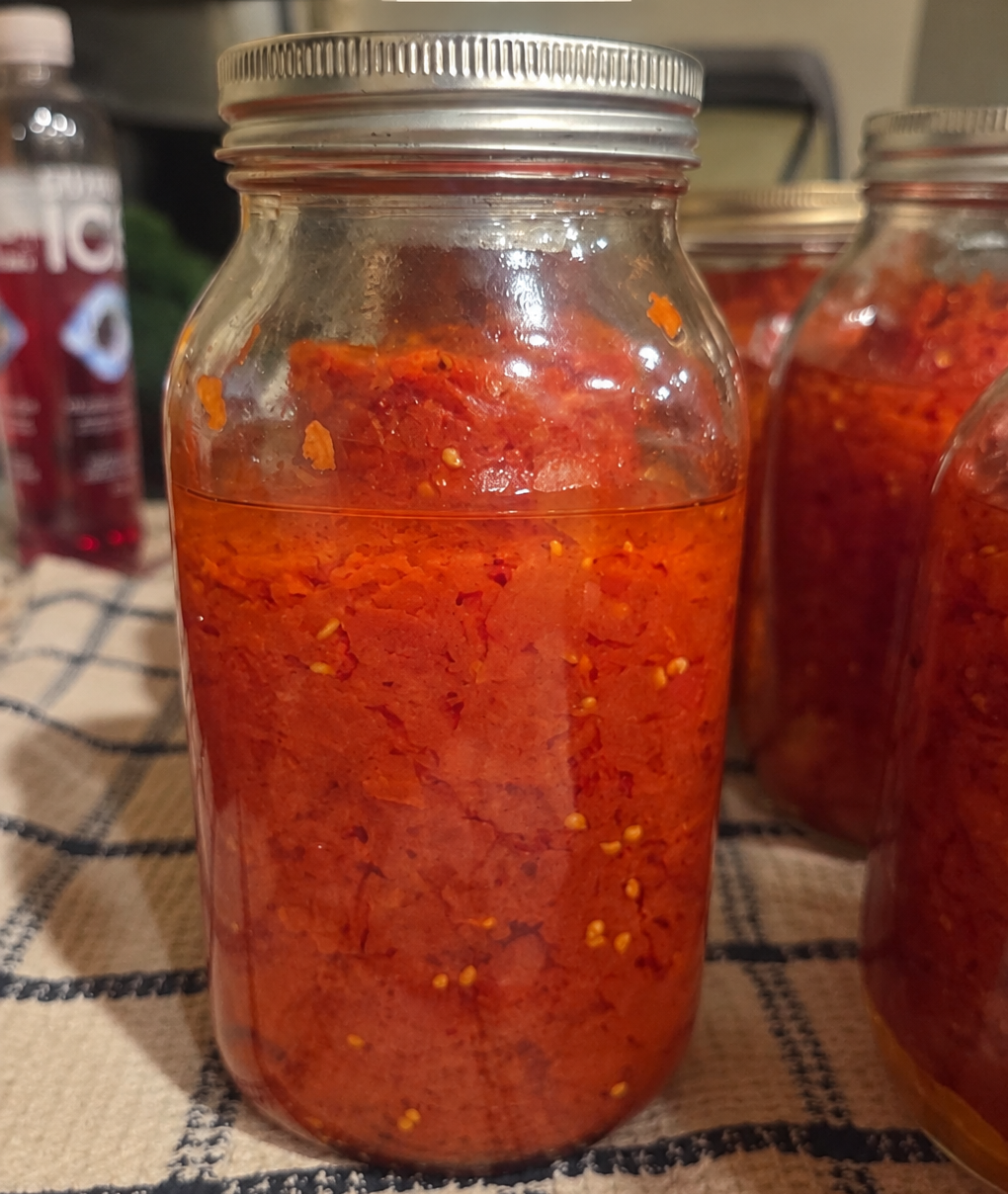
A few jars of homemade tomato sauce can make an ordinary kitchen feel wonderfully prepared.
The jars in the photo appear to contain a chunky tomato-based sauce, the kind that works beautifully with pasta, pizza, meatballs, casseroles, eggs, or even a warm piece of crusty bread when nobody feels like making a complicated dinner.
This version keeps things simple with ripe tomatoes, onion, garlic, herbs, and just enough seasoning to let the tomatoes stay in charge.
It can be stored safely in the refrigerator for short-term use or frozen for longer storage. If you want to make it shelf-stable through home canning, use a tested canning recipe and follow its acidification and processing instructions exactly.
Why Homemade Tomato Sauce Is Worth Making
Store-bought tomato sauce is convenient, but homemade sauce has a completely different personality.
It tastes fresher.
You control the salt.
You decide whether you want it smooth or chunky.
And when tomatoes are at their best, making several jars at once is an easy way to save that flavor for later.
This recipe is especially useful when you have:
- Very ripe garden tomatoes
- Farmers’ market tomatoes
- Tomatoes that need using quickly
- A large family meal coming up
- A freezer that could use a few ready-made dinners
The sauce is flexible enough to become pasta sauce one night and pizza sauce the next.
Best Tomatoes for Sauce
Meaty tomatoes are usually easiest to work with because they contain less water and more pulp.
Excellent choices include:
- Roma tomatoes
- Plum tomatoes
- San Marzano-style tomatoes
- Amish Paste tomatoes
That said, ordinary round tomatoes still work.
If they are very juicy, simply cook the sauce a little longer so excess moisture evaporates.
Use tomatoes that are fully ripe, fragrant, and free from mold.
Cut away small bruised areas, but discard tomatoes that are badly spoiled.
Good sauce begins with good tomatoes.
Ingredients
This recipe makes approximately 6 to 7 cups of sauce, depending on how long you reduce it.
- 5 pounds ripe tomatoes
- 2 tablespoons olive oil
- 1 medium yellow onion, finely chopped
- 4 garlic cloves, minced
- 1 teaspoon salt, plus more to taste
- ½ teaspoon black pepper
- 1 teaspoon dried oregano
- 1 teaspoon dried basil
- ½ teaspoon dried thyme, optional
- ¼ teaspoon red pepper flakes, optional
- 1 teaspoon sugar, optional
- 2 tablespoons tomato paste, optional
- 2 tablespoons chopped fresh parsley or basil
For ordinary refrigerator or freezer storage, you can season it however you like.
For shelf-stable canning, however, do not simply use this exact recipe and place the jars in the pantry. Home-canned tomato products need a tested preservation formula because acidity, added vegetables, and processing method all matter.
Prepare the Tomatoes
Wash the tomatoes thoroughly.
Remove the stems and any damaged areas.
For a rustic sauce, you can leave the skins on and blend the sauce later.
If you prefer a smoother texture, peel the tomatoes first.
An easy way to peel them is to bring a large pot of water to a boil.
Cut a shallow X into the bottom of each tomato.
Place the tomatoes in boiling water for about 30–60 seconds, then transfer them immediately to a bowl of cold water.
The skins should loosen and peel away easily.
Cut the tomatoes into quarters.
Remove the hard core.
For a thicker sauce, gently squeeze out some of the watery seeds before chopping.
Start With Onion and Garlic
Heat the olive oil in a large heavy-bottomed pot over medium heat.
Add the chopped onion.
Cook for approximately 5 minutes, stirring occasionally, until the onion becomes soft and translucent.
Add the garlic.
Cook for another 30–60 seconds.
Do not let the garlic burn.
Burned garlic can make an entire pot of sauce bitter, and after peeling five pounds of tomatoes, nobody deserves that ending.
Add the Tomatoes
Add all the chopped tomatoes to the pot.
They may look like far too many at first.
Don’t worry.
Tomatoes shrink considerably as they cook.
Add the salt, black pepper, oregano, basil, thyme, and optional red pepper flakes.
Stir everything thoroughly.
Bring the mixture to a gentle simmer.
Cook Until Thick
Reduce the heat to medium-low.
Allow the tomatoes to simmer uncovered for approximately 45–75 minutes.
Stir every 10 minutes or so.
As the sauce cooks, the tomatoes will break down and excess liquid will evaporate.
If you prefer a very thick sauce, continue simmering longer.
For a richer flavor and deeper color, stir in two tablespoons of tomato paste during the final 20 minutes.
If the tomatoes taste extremely acidic, you can add up to one teaspoon of sugar.
Taste first.
Ripe summer tomatoes may not need any sugar at all.
Chunky or Smooth?
This is completely your choice.
For chunky sauce, use a potato masher to break the tomatoes down slightly while they cook.
For a smoother sauce, use an immersion blender.
Blend directly in the pot until you reach your preferred consistency.
You can leave a few small pieces for texture.
For an ultra-smooth sauce, carefully transfer it to a blender in batches.
Be cautious with hot liquids.
Never completely seal a blender filled with steaming sauce because pressure can build.
Add Fresh Herbs at the End
Once the sauce reaches the consistency you like, stir in the fresh parsley or basil.
Fresh herbs taste brighter when added near the end rather than cooked for an hour.
Taste again.
Adjust the salt, pepper, or oregano if needed.
At this point, you should have a rich red sauce that smells like you’ve spent all afternoon doing something far more complicated than chopping tomatoes.
Easy Garlic Tomato Variation
If your family loves garlic, increase the garlic from four cloves to six.
You can also roast the garlic first.
Wrap a small garlic bulb in foil and roast at 400°F until soft.
Squeeze a few roasted cloves into the finished sauce.
This gives the sauce a sweeter, mellow garlic flavor without the sharpness of raw garlic.
Spicy Tomato Sauce
For a little heat, add:
- ½ teaspoon chili flakes
- ½ finely chopped fresh chili
- ½ teaspoon smoked paprika
Start small.
You can always add more heat later.
It is considerably harder to remove chili once everyone at the table has started drinking water like they’ve crossed a desert.
Tomato and Vegetable Version
For sauce intended for the refrigerator or freezer, you can add extra vegetables.
Try:
- Diced bell pepper
- Grated carrot
- Finely chopped zucchini
- Mushrooms
- Celery
Cook the vegetables with the onions before adding the tomatoes.
This is a useful way to add more vegetables to pasta dishes, especially if you blend the finished sauce smooth.
Again, extra vegetables can change the safety requirements for shelf-stable canning, so keep this version refrigerated or frozen unless following a tested preservation recipe.
How to Use the Sauce
This sauce is much more versatile than pasta alone.
Use it for:
- Spaghetti
- Lasagna
- Pizza
- Meatballs
- Chicken Parmesan
- Baked ziti
- Stuffed peppers
- Eggplant dishes
- Shakshuka-style eggs
- Tomato soup
- Vegetable casseroles
You can also simmer browned ground beef or sausage in the sauce for a quick meat sauce.
For pizza, cook the sauce slightly longer until very thick.
Refrigerator Storage
Let the finished sauce cool.
Transfer it to clean glass jars or airtight food-safe containers.
Do not leave a large pot of sauce sitting at room temperature for hours.
Refrigerate promptly.
For best quality and safety, use refrigerated homemade tomato sauce within approximately 3–4 days.
Always use a clean spoon when removing sauce from the jar.
If you need longer storage, freezing is the easiest option.
How to Freeze Tomato Sauce
Tomato sauce freezes beautifully.
Allow it to cool completely.
Pour it into freezer-safe containers, leaving some space at the top because liquids expand when frozen.
You can also freeze smaller portions.
One-cup portions are especially convenient for quick meals.
For easy meal preparation, freeze sauce in:
- Freezer containers
- Silicone portion trays
- Heavy-duty freezer bags
Label each container with the date.
For best flavor and texture, try to use it within about 3–6 months.
Thaw overnight in the refrigerator or gently reheat from frozen in a saucepan.
About Home Canning
The jars in the image may look pantry-ready, but putting tomato sauce into a Mason jar and tightening the lid does not automatically make it safe for room-temperature storage.
Tomatoes can vary in acidity.
Adding onions, garlic, peppers, mushrooms, or other low-acid ingredients can change the preservation requirements even further.
For shelf-stable tomato sauce, use a current tested canning recipe from a trusted home-preservation authority.
Follow the specified:
- Ingredient proportions
- Jar size
- Acidification
- Headspace
- Processing method
- Processing time
- Altitude adjustment
Do not improvise processing times.
If you are uncertain, refrigerate or freeze the sauce instead.
Freezing is wonderfully forgiving and requires far less calculating while standing over a steaming pot.
Signs the Sauce Should Be Discarded
For refrigerated sauce, throw it away if you notice:
- Mold
- Strong fermented odor
- Unexpected bubbling
- Slimy texture
- Swollen container
- Strange discoloration
- An unpleasant taste or smell
Do not taste suspicious preserved food just to determine whether it is safe.
When in doubt, discard it.
A fresh batch of tomato sauce is cheaper than a bad food-safety experiment.
Frequently Asked Questions
Can I use canned tomatoes?
Yes.
Use good-quality whole peeled or crushed tomatoes when fresh tomatoes are unavailable.
Do I have to peel the tomatoes?
No.
You can cook them with the skins and blend the sauce afterward.
Can I leave out the sugar?
Absolutely.
Sugar is optional and only helps balance very acidic tomatoes.
Can I freeze sauce in glass jars?
Yes, but use freezer-safe jars and leave adequate expansion space at the top.
Can I add meat?
You can add cooked meat if the sauce will be refrigerated or frozen.
Do not use an ordinary tomato-sauce canning process for a meat sauce.
How do I make it thicker?
Simmer uncovered for longer or add a small amount of tomato paste.
Why is there liquid separating from my sauce?
Some separation is normal, particularly with fresh tomatoes.
Stir the sauce before serving. Longer cooking can also help concentrate it.
Final Thoughts
Homemade tomato sauce is one of those recipes that rewards a little extra effort.
A pile of ripe tomatoes transforms into jars of rich, savory sauce that can rescue dinner on busy evenings.
Keep it chunky, blend it smooth, add garlic, make it spicy, or sneak in extra vegetables.
For refrigerator and freezer storage, you have plenty of flexibility.
And if you want those beautiful jars sitting safely on a pantry shelf, use a tested home-canning recipe rather than guessing.
However you store it, homemade tomato sauce turns a few humble tomatoes into something genuinely useful—and having another jar ready for pasta night rarely feels like a bad decision.