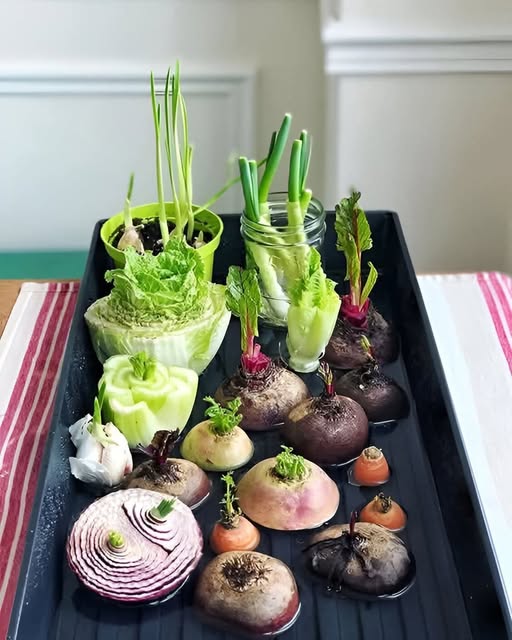
- Cebollín:
- Coloca los extremos inferiores del cebollín en un vaso con agua.
- Cambia el agua cada pocos días.
- ¡Verás nuevo crecimiento en una o dos semanas!
- Lechuga:
- Usa la base sobrante de una lechuga romana.
- Colócala en un plato poco profundo con agua, con el lado cortado hacia arriba.
- Manténla en un lugar soleado y observa cómo brotan nuevas hojas.
- Apio:
- Pon la base de un manojo de apio en un bol con agua.
- Cambia el agua cada dos días.
- Nuevos tallos comenzarán a crecer desde el centro.
- Albahaca:
- Toma un esqueje de albahaca y colócalo en un vaso con agua.
- Una vez que se formen raíces, plántalo en tierra.
- ¡Disfruta de albahaca fresca en poco tiempo!
- Papas y Camotes:
- Usa los ojos de las papas (brotes) y plántalos en tierra.
- Para los camotes, puedes usar brotes (tallos que crecen del camote).
- Jengibre:
- Planta un pequeño trozo de raíz de jengibre con los brotes hacia arriba.
- Cubre con tierra y mantenlo húmedo.
- Nuevos brotes crecerán desde los brotes.
Beneficios de Regenerar Alimentos
- Reducción de Residuos: Menos desperdicio de alimentos significa una huella de carbono más pequeña.
- Ahorro de Dinero: Cultiva tus propias hierbas y vegetales, reduciendo los costos del supermercado.
- Suministro Continuo: Siempre tendrás ingredientes frescos a mano.
- Eco-Amigable: Promueve un estilo de vida más verde y autosuficiente.
Sumérgete en esta práctica gratificante y sostenible. No solo es buena para el medio ambiente, sino que también trae una sensación de logro y alegría. 🌿🌍
¡Disfruta experimentando con la regeneración de alimentos en casa! 😊 Si tienes más consejos sostenibles interesantes o quieres más detalles sobre jardinería, ¡estoy aquí para ayudarte! 🌱✨
- Home Canned Potatoes
 A shelf full of home-canned potatoes is one of those pantry sights that makes dinner feel much easier before you have even decided what to cook. Open a jar and you already have tender potatoes ready for soups, breakfast skillets, casseroles, stews, mashed potatoes, or a quick side dish. Potatoes are a low-acid vegetable, so … Read more
 - Homemade Chunky Tomato Sauce
 A few jars of homemade tomato sauce can make an ordinary kitchen feel wonderfully prepared. The jars in the photo appear to contain a chunky tomato-based sauce, the kind that works beautifully with pasta, pizza, meatballs, casseroles, eggs, or even a warm piece of crusty bread when nobody feels like making a complicated dinner. This … Read more
 - Pressure Canned Sausage
 Homemade sausage in jars can be wonderfully convenient. Once safely preserved, it gives you ready-to-use meat for breakfast, casseroles, soups, pasta dishes, gravy, sandwiches, and those evenings when cooking from scratch feels slightly too ambitious. The important part is the method. Sausage is a low-acid meat, so shelf-stable jars require pressure canning with a tested … Read more
 - Guava Leaves and Swollen Ankles: A Gentle Look at This Traditional Herbal Tea
 Swollen ankles can be uncomfortable and may happen for many different reasons. Sometimes mild swelling follows a long day of standing, sitting, travel, or warm weather. In other situations, ankle swelling can be related to an underlying health problem that needs proper evaluation. Guava leaves are traditionally used in various cultures to prepare herbal teas. … Read more
 - What Happens to Your Body When You Eat a Banana Before Bed? A Science-Based Look at This Simple Nighttime Habit
 A banana before bed is a simple snack that has become popular among people looking for an easy evening food. Bananas are naturally sweet, convenient, and provide carbohydrates, fiber, potassium, vitamin B6, and other nutrients. But what actually happens when you eat one at night? For most healthy adults, eating a banana before bed is … Read more
 - Ginger for Digestion, Joint Comfort, and Circulation: A Gentle Daily Habit
 Ginger has been used in cooking and traditional food practices for centuries. Its warm, slightly spicy flavor makes it a popular addition to teas, soups, sauces, and everyday meals. Today, ginger is also often discussed as part of a healthy lifestyle, particularly when it comes to digestion, comfortable movement, and circulation. While ginger contains naturally … Read more
 - Can Two Ingredients Clear Cloudy Eyes in 7 Minutes? What to Know After 55
 Cloudy or hazy vision can be frustrating, particularly when it begins to interfere with reading, driving, or everyday activities. It is tempting to look for a simple food combination that can restore clear vision within minutes. However, there is an important distinction between supporting overall eye health and treating an eye condition. If cloudy vision … Read more
 - The Golden Trio: 18 Remarkable Benefits of Ginger, Cloves, and Honey for Everyday Wellness
 Ginger, cloves, and honey have been valued in kitchens and traditional food cultures for generations. Each ingredient has a distinctive flavor, and together they create a warm, aromatic combination that works well in teas, breakfast dishes, and simple homemade recipes. This trio also contains a variety of naturally occurring compounds and nutrients. However, it’s important … Read more
 - Garlic and Lime for Everyday Wellness: What This Simple Kitchen Pair Can—and Can’t—Do for Your Eyes
 Garlic and lime are two familiar kitchen ingredients that often appear in traditional wellness routines. Both are flavorful, affordable, and easy to add to everyday meals. Because garlic and lime contain various nutrients and plant compounds, it’s reasonable to wonder whether combining them has any special benefits for eye health. The important distinction is between … Read more